
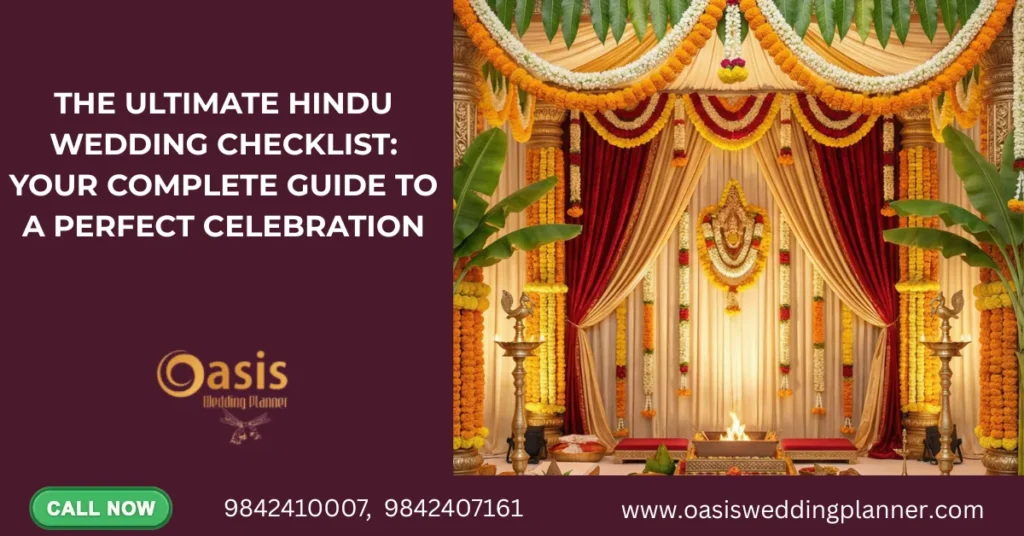
A Hindu wedding is one of the most significant milestones in life, deeply rooted in culture, rituals, and family traditions. While every ceremony is filled with joy and emotion, the planning process can feel overwhelming without a structured approach. At Oasis Wedding Planner, we believe every couple deserves a beautiful, well-organized, and stress-free wedding experience.
This complete Hindu wedding checklist covers every important detail—from early preparations to final rituals—helping you plan your wedding confidently and gracefully.
Why You Need a Hindu Wedding Checklist
Hindu weddings are usually multi-day celebrations involving several traditional ceremonies such as engagement or roka, haldi, mehendi, sangeet, the main wedding ceremony (vivah), and the reception. Each ceremony has its own customs, requirements, and timelines.
A detailed checklist helps you stay organized, coordinate vendors effectively, manage budgets wisely, and ensure that no ritual or arrangement is missed.
1. Pre-Wedding Phase: Start Early (8–12 Months Before)
- Fix the Auspicious Wedding Date (Muhurat)
The first step in planning a Hindu wedding is selecting an auspicious wedding date and muhurat. Families often consult priests or astrologers to choose a time that aligns with astrological beliefs and family traditions. Once finalized, this date becomes the foundation for all further planning. - Set Your Wedding Budget
Your wedding budget plays a vital role in every planning decision. Create a clear and realistic budget that includes expenses for the venue, catering, décor, photography and videography, bridal and groom services, entertainment, transportation, and logistics. Proper budget planning helps avoid unnecessary stress and unexpected costs. - Finalize the Guest List
The number of guests directly affects venue selection, catering quantities, invitation design, and seating arrangements. Finalizing your guest list early ensures smoother coordination and better cost management. - Book Venues for All Ceremonies
Hindu weddings often involve multiple events. Depending on your preferences and traditions, you may need separate spaces for engagement or roka, haldi, mehendi, sangeet, the wedding ceremony, and the reception. Some couples choose a single venue with different décor themes, while others prefer separate locations for each function. - Hire Key Vendors in Advance
Booking experienced professionals early ensures quality service and availability. Essential vendors include a wedding planner, priest or pandit, decorators, caterers, photographers, videographers, makeup artists, DJ or sound system providers, and transportation services.
2.Attire, Jewelry, and Shopping Checklist (6–8 Months Before)
- Bride’s Wardrobe
The bride’s wardrobe typically includes a bridal saree or lehenga for the wedding, a reception outfit, attire for haldi and mehendi, matching jewelry sets, bridal footwear, and accessories such as clutches and hair ornaments. - Groom’s Wardrobe
The groom usually selects a sherwani or traditional wedding attire, reception outfit, footwear, and accessories such as saafa, stole, and brooch. - Family Outfit Coordination
Outfits for parents, siblings, extended family members, bridesmaids, and groomsmen should be coordinated in advance. This creates a harmonious look and enhances wedding photographs.
3. Ceremony-Wise Wedding Checklist
- Engagement or Roka Ceremony
This ceremony marks the formal union of two families. Important arrangements include engagement rings, floral décor, invitations, family gifts, sweets, refreshments, and photography. - Haldi Ceremony
The haldi ceremony involves applying turmeric paste to the bride and groom as a symbol of purification and blessings. Essential items include turmeric paste, decorative bowls, towels, change of clothes, simple floral décor, refreshments, and photography arrangements. - Mehendi Ceremony
Mehendi is a joyful pre-wedding event where intricate designs are applied to the bride’s hands and feet. Planning includes booking professional mehendi artists, arranging comfortable seating, light décor, music, snacks, beverages, and a designated photo area. - Sangeet Ceremony
The sangeet is a lively celebration filled with music, dance, and performances by family and friends. Planning involves arranging a stage, sound and lighting systems, DJ or live band, seating, and dinner arrangements. - Main Wedding Ceremony (Vivah)
The wedding ceremony is the spiritual heart of a Hindu wedding. Ritual essentials include a kalash, sacred fire setup, ghee, camphor, rice, flowers, betel leaves, coconuts, sacred threads, mangalsutra, and sindoor.
Key rituals such as kanyadaan, vivah homa, saat pheras, mangalsutra dharanam, and sindoor daan are conducted under the guidance of a priest, each symbolizing sacred vows and lifelong commitment.
4. Decor and Ambience Planning
5. Catering and Menu Planning
Food is one of the most memorable aspects of any wedding. Catering arrangements should include welcome drinks, traditional meals, live food counters, sweets and desserts, special dietary options, and beverage services. Coordinating food service with ceremony timings ensures a smooth guest experience.
6. Guest Comfort and Logistics
Guest comfort is essential for a successful wedding celebration. Make arrangements for accommodation for outstation guests, shuttle services, comfortable waiting areas, and proper transportation between venues. Planning these details in advance ensures guests feel cared for throughout the celebrations.
7. Return Gifts and Wedding Favors
8. Final Wedding Day Coordination
On the wedding day, professional coordination ensures everything runs smoothly. This includes managing vendor schedules, guiding guests, overseeing rituals, handling last-minute challenges, and ensuring ceremonies follow the planned timeline. With proper coordination, families can relax and enjoy the celebration.
Final Thoughts
Ideally, planning should begin 8 to 12 months before the wedding date. Larger weddings may require additional time for coordination.
A priest ensures rituals are performed correctly according to scriptures and customs, making them an important part of the ceremony.
Yes. Many couples blend traditional rituals with modern décor, music, and styling while preserving cultural significance.