
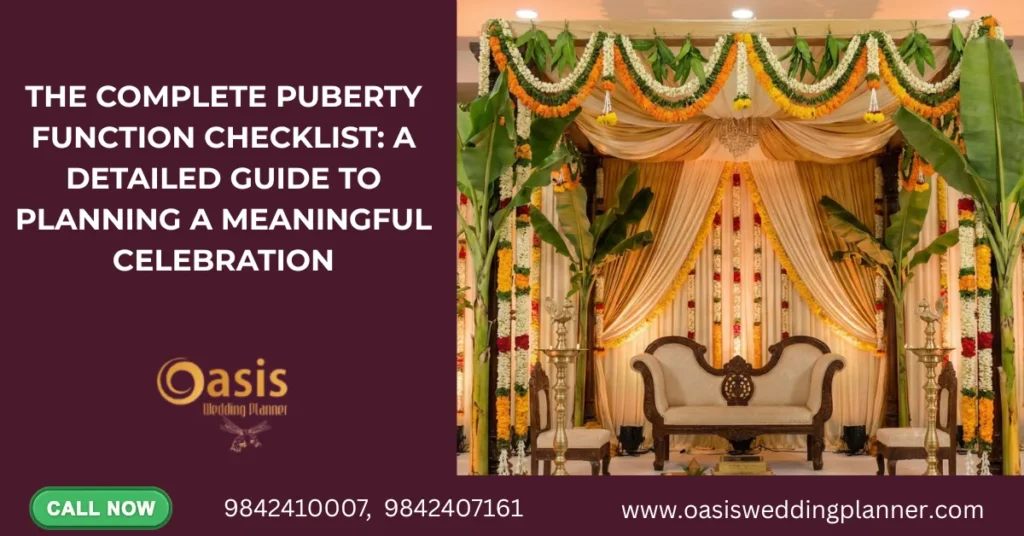
A puberty function is one of the most important rites of passage in many cultural traditions. In Hindu custom, it marks the transition of a girl into womanhood after her first menstrual cycle. This ceremony carries significant emotional and cultural meaning for families, symbolizing blessings, protection, and a new phase of life. Whether you are planning an intimate home celebration or a larger event with family and friends, proper planning ensures that the ceremony is meaningful, respectful, and memorable.
At Oasis Wedding Planner, we understand the cultural importance of puberty ceremonies and tailor each event to fit the family’s values and preferences. This complete puberty function checklist will guide you step by step through the planning process.
What Is a Puberty Function and Why Is It Important?
A puberty function—often referred to as Ritusuddhi, Ritu Kala Samskara, Half-Saree Ceremony, Uchav, or similar names depending on region—is a cultural celebration that marks a girl’s transition into womanhood. It is traditionally observed soon after a girl’s first period. The ceremony is intended to honor her growth, ensure her health and prosperity, and bless her future.
Modern celebrations may be simple or elaborate based on family preference, but all share the core purpose of celebrating the young woman’s journey and offering spiritual and emotional support.
When Should the Puberty Function Be Held?
Puberty Function Planning Checklist
Planning a puberty function involves several key steps. Use this checklist to organize your preparation and ensure nothing is missed.
1. Decide the Date and Ceremony Plan
The first step in planning is selecting an appropriate date. Decide whether you want a traditional ritual at home, a formal event at a venue, or a themed celebration with extended family and friends. Choose a date that aligns with family preferences and availability.
2. Prepare Your Budget
Set a realistic budget that reflects the scale of your celebration. Your budget should include:
- Venue charges (if outside home)
- Ritual requirements and offerings
- Decor and floral arrangements
- Invitations
- Catering and refreshments
- Photography and videography
- Gifts and return favors
- Entertainment (if applicable)
Having a clear budget helps prioritize expenses and avoid overspending.
3. Guest List and Invitations
Determine your guest list early. Decide whether this ceremony will be a private family function or a larger celebration. Once your list is ready, select an invitation style:
- Printed invitations
- Digital invitations
- Personalized cards with family photos or cultural motifs
Ensure the invitations clearly state the date, time, venue, dress code (if any), and RSVP details.
4. Select the Venue
Depending on the number of guests and the nature of the event, you may choose:
Your home or backyard
- A community hall
- A banquet or event space
- A hotel function room
Ensure the venue has sufficient space for rituals, guest seating, and any additional entertainment or activities you plan to include.
5. Book a Priest or Cultural Guide
While the puberty function can be conducted informally, many families involve a priest or cultural guide to ensure that traditional rites are observed correctly. A priest can lead the ceremony, explain the rituals, and bless the celebrant and family.
6. Ritual Essentials
Traditional puberty function ceremonies involve specific items used during prayers and blessings. Prepare the following ritual essentials:
- Kalash (a sacred pot with water)
- Turmeric, kumkum, sandalwood paste
- Flower garlands and petals
- Betel leaves, nuts, and coconuts
- Fruits and traditional offerings
- Traditional cloth for the celebrant
- Sacred thread or mauli
- Lamps and incense
If you are including any specific regional customs, prepare those items as guided by your priest or family tradition.
7. Outfit and Styling
Outfits are an important element of the celebration. The young woman usually wears a traditional outfit, such as:
- A saree or half-saree
- A traditional lehenga
- Other culturally significant attire
Choose comfortable and culturally appropriate jewelry and accessories. Family members can coordinate outfits to match the ceremony’s theme or color palette.
8. Decor and Ambience
Decorations set the tone for your event. The décor can be simple or elaborate depending on your budget and style. Consider the following elements:
- Entrance decor
- Floral arrangements
- Traditional Mandap or ritual space design
- Themed decor (elegant, pastel, traditional, etc.)
- Seating arrangements for guests
Work with professional decorators if you want a cohesive and meaningful decorative theme.
9. Catering and Refreshments
Decide the type of food you wish to serve based on guest count:
- Refreshments or snacks if it is a small ceremony
- Lunch or dinner for larger celebrations
- Special kids’ menu if children are attending
- Traditional sweets and desserts
Discuss dietary preferences and provide vegetarian and allergy-friendly options.
10. Photography and Videography
Capturing the memories of this important event allows you to look back with joy. Arrange for:
- Professional photographs of the ritual
- Family portraits
- Candid shots of guests
- A video recording or highlight reel (optional)
A well-planned shot list ensures no moment is missed.
11. Music and Entertainment
Soft background music during the ritual creates a serene ambiance. If you are organizing post-ceremony celebrations, consider:
- A DJ or music playback system
- Live performers
- Dance sequences or family performances
Choose entertainment based on the demographic of your guests and the overall celebration style.
12. Return Gifts and Keepsakes
Giving guests a token of appreciation is a thoughtful touch. Popular return gift ideas include:
- Personalized keepsakes
- Traditional sweets packaged elegantly
- Eco-friendly gifts
- Small home decor items
- Prayer or spiritual gifts
Personalized thank-you cards add extra warmth.
13. Plan for Guest Comfort
Ensure your guests are comfortable throughout the ceremony. Make arrangements for:
- Adequate seating
- Shade or cooling if outdoors
- Restrooms
- Drinking water stations
- Help desk or guides (if the guest list is large)
This enhances their experience and shows attention to detail.
14. Create a Ceremony Timeline
Draft a timeline that includes:
- Guest arrival and welcome
- Ritual start time
- Blessing sessions
- Photography time slots
- Food service
- Return gift distribution
- Any entertainment
A planned schedule helps manage the flow of the event without delays.
Tips for a Meaningful Puberty Function
- Include family elders during the rituals for their blessings and guidance.
- Incorporate cultural elements that resonate with your family traditions.
- Keep the celebrations respectful and centered on the significance of the occasion.
- Consider a theme that reflects the celebrant’s personality.
- Keep some flexibility in the schedule to accommodate guests and ceremonies.
Final Thoughts
A puberty function is a deeply meaningful and joyous occasion that celebrates growth, blessings, and family unity. With careful planning and thoughtful execution, it can become a cherished memory for the celebrant and all attendees.
At Oasis Wedding Planner, we specialize in curating meaningful celebrations that respect tradition, reflect personal style, and deliver unforgettable experiences. Allow our team to support you in planning a beautiful puberty function that honors this important milestone with grace and elegance.
If you would like a printable version of this checklist, theme ideas, or customized planning assistance, feel free to reach out to us at Oasis Wedding Planner.
A puberty function celebrates a young girl’s biological and cultural transition into womanhood after her first menstrual cycle. It is considered a rite of passage that invites blessings, acknowledges maturity, and evokes community support.
Modern celebrations often blend tradition with contemporary elements such as themed décor, curated music playlists, professional photography, interactive entertainment, and personalized keepsakes while still honoring cultural significance.