
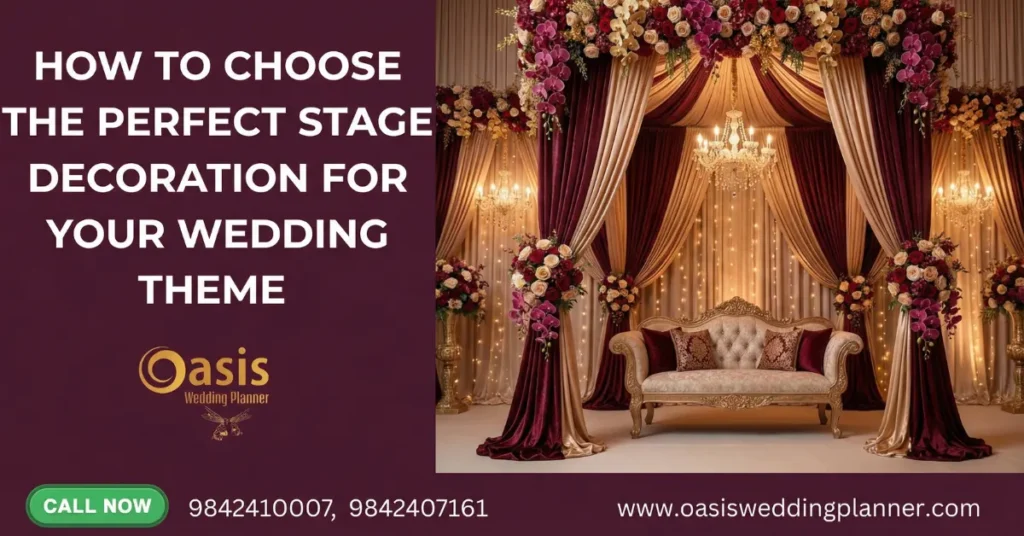
The wedding stage is more than just a backdrop—it is the visual heart of your celebration. It is where sacred rituals take place, where photographs are captured for a lifetime, and where guests focus their attention throughout the event. Choosing the perfect stage decoration that aligns with your wedding theme requires thoughtful planning, creativity, and an understanding of aesthetics, culture, and functionality.
Whether you are planning a traditional South Indian wedding, a grand reception, or a modern minimalist ceremony, the right stage decor can elevate your wedding from beautiful to unforgettable. This guide will walk you through every essential aspect of selecting the perfect stage decoration for your wedding theme.
1. Understand Your Wedding Theme Clearly
Before selecting any decor elements, it is crucial to define your wedding theme clearly. Your stage decoration should be a natural extension of this theme, not something that feels disconnected or forced.
Common wedding themes include:
- Traditional South Indian wedding
- Royal or palace-inspired wedding
- Floral and garden-themed wedding
- Modern minimalist wedding
- Luxury or celebrity-style wedding
- Rustic or vintage wedding
- Destination or outdoor wedding
Once your theme is finalized, all decor decisions—from backdrop design to lighting and seating—should align seamlessly with it.
2. Match Stage Decor with Cultural and Ritual Requirements
For Indian weddings, cultural traditions play a vital role in stage decoration. A stage designed for a Hindu wedding ceremony differs significantly from a Christian or reception stage.
For example:
Traditional weddings often require space for rituals like homam, mangalya dharanam, or kanyadaan.
Religious symbols, temple-inspired backdrops, brass lamps, or banana leaf decor may be essential.
Seating arrangements for elders, priests, or family members must be accommodated.
Always ensure that the stage design respects cultural values while maintaining visual appeal.
3. Choose the Right Stage Backdrop Design
The backdrop is the most prominent element of the wedding stage. It sets the tone and acts as the focal point in photographs and videos.
Popular backdrop styles include:
- Floral walls with fresh or artificial flowers
- Fabric drapes in silk, velvet, or sheer materials
- LED walls with customized visuals
- Wooden or carved panels for a traditional or royal look
- Greenery walls for outdoor or eco-themed weddings
Your choice should depend on your theme, venue size, lighting conditions, and budget.
4. Select a Color Palette That Complements the Theme
Color plays a powerful role in stage decoration. A well-chosen color palette enhances elegance and ensures harmony across all decor elements.
Guidelines for selecting colors:
- Traditional weddings often use red, maroon, gold, and ivory.
- Pastel shades work well for daytime or garden weddings.
- Bold colors like emerald, royal blue, or burgundy suit grand receptions.
- Neutral tones like white, beige, and blush are ideal for modern or minimalist themes.
Avoid overcrowding the stage with too many colors. Stick to two or three primary shades for a refined look.
5. Focus on Lighting for Dramatic Impact
Lighting can transform even the simplest stage into a breathtaking setup. Proper lighting highlights the decor, enhances facial features in photos, and creates a magical ambiance.
Key lighting elements to consider:
- Warm lights for traditional and romantic themes
- Spotlights to highlight the couple
- Backlighting for depth and dimension
- Chandeliers or hanging lights for luxury stages
- LED strips for modern or reception stages
Always test lighting during setup to ensure there are no harsh shadows or overly bright areas.
6. Choose Comfortable and Stylish Stage Seating
Stage seating is both functional and decorative. The chairs or sofas used should complement the theme while offering comfort during long ceremonies or receptions.
Popular seating options include:
- Ornate sofas for royal or luxury weddings
- Traditional wooden chairs for cultural ceremonies
- Modern cushioned seating for receptions
- Customized seating with monograms or carvings
Ensure the seating height and placement allow photographers to capture perfect shots without obstruction.
7. Balance Stage Size with Venue Space
The size of the stage should be proportionate to the venue. A stage that is too large can overpower the hall, while a small stage may feel insignificant.
Consider:
- Ceiling height of the venue
- Distance between the stage and audience seating
- Space required for rituals, movement, and photography
- Venue restrictions on hanging decor or structures
Professional wedding planners and decorators can help design a stage that fits perfectly within the venue’s dimensions.
8. Personalize the Stage to Reflect Your Story
Personalization adds emotional value to your stage decor. It transforms the setup from a generic design into something uniquely yours.
Personalization ideas include:
- Couple name initials or monograms
- Customized signage or quotes
- Photographic elements integrated subtly
- Symbols representing shared interests or journeys
- Cultural or family heirloom decor pieces
- Personal touches should enhance the decor without overwhelming it.
9. Consider Budget Without Compromising Elegance
A stunning stage does not always require an extravagant budget. Smart planning and creative choices can achieve a premium look within reasonable costs.
Budget-friendly strategies:
- Use fabric draping instead of heavy structures
- Mix fresh and artificial flowers
- Focus decor on key focal areas only
- Use lighting creatively to enhance simple designs
- Reuse stage elements for multiple events when possible
- Transparent discussions with your wedding planner about budget expectations help avoid last-minute compromises.
10. Work with Experienced Wedding Decor Professionals
Choosing the perfect stage decoration is not just about ideas—it is about execution. Experienced wedding decorators understand logistics, safety, aesthetics, and time management.
Professional planners help with:
- Concept design and 3D visualization
- Theme consistency across all events
- Material selection and quality control
- Timely setup and dismantling
- Backup planning for outdoor or weather-sensitive events
- Working with experts ensures your stage looks flawless on the big day.
11. Do a Final Review Before the Wedding Day
Before the event, conduct a final walkthrough or review of the stage design plan.
Check for:
- Correct color shades and materials
- Proper lighting placement
- Seating comfort and alignment
- Clear pathways for rituals and photography
- Safety and stability of structures
A final review ensures peace of mind and a smooth wedding day experience.
Conclusion
Choosing the perfect stage decoration for your wedding theme is a blend of creativity, planning, cultural understanding, and professional execution. The right stage not only enhances visual appeal but also elevates emotions, memories, and the overall wedding experience.
By clearly defining your theme, understanding venue dynamics, focusing on lighting and color harmony, and working with experienced wedding planners, you can create a stage that truly reflects your story and leaves a lasting impression on everyone present.
Ideally, stage decor should be finalized at least 2 to 3 months before the wedding to allow time for customization, approvals, and material sourcing.
Yes. Many decor elements can be adapted and reused with slight modifications for ceremonies, receptions, or engagements.
LED backdrops are ideal for modern or reception stages, while traditional décor suits cultural ceremonies. The choice depends on your theme and venue.
Good lighting, balanced colors, uncluttered backdrops, and proper seating placement are key factors for photography-friendly stage décor.
Absolutely. Strategic use of lighting, fabrics, and focal décor elements can create an elegant stage even within a modest budget.
Yes. Consistency between stage decor and venue decor creates a cohesive and premium wedding experience.